How an electronic batch record built from the approved BMR's own words, training every role takes at its own pace, and a rehearsal before go-live take a pharmaceutical plant from paper to a validated eBMR in weeks, not months.
PDF · 6 pages · free
Get the whitepaperWhat you will learn
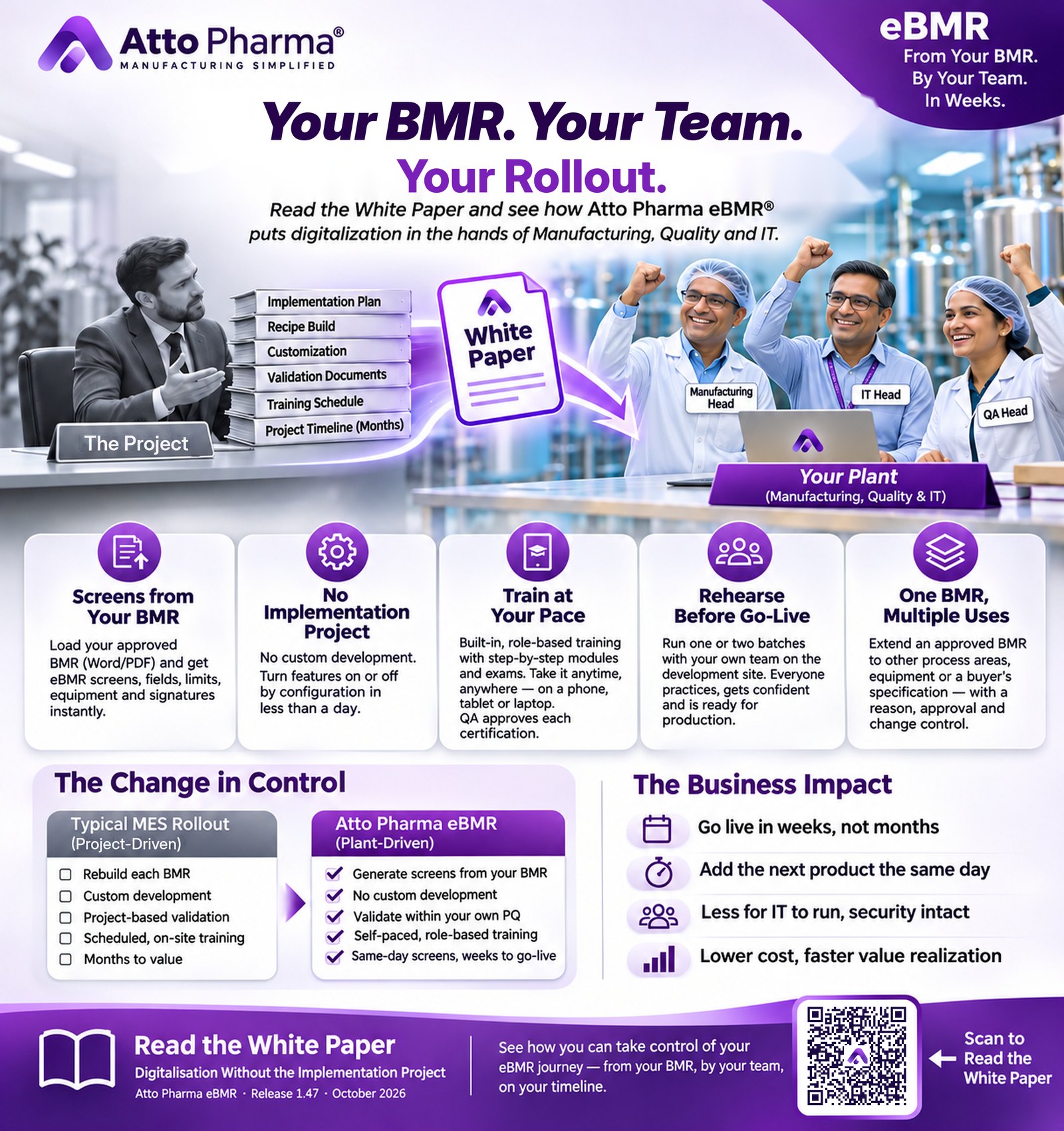
- How a typical MES or eBR rollout works, and why it takes months
- Screens generated from the approved BMR's own words: configuration, not custom development
- How a generated screen is validated: the generator qualified with every release, each product in the plant's own PQ
- Training without the classroom: one certification per role, in order, at each person's own pace
- A rehearsal with the team on the development site before the first real batch
- Extending one approved BMR to other process areas and buyers' specifications
- A fair comparison, where a traditional MES still leads, and what to measure in a pilot
Executive summary
Most plants that go digital buy software and then start a project: each approved BMR is rebuilt as recipes and templates, gaps are filled with custom development, and people are trained in scheduled courses. The value arrives many months later.
Atto Pharma eBMR removes most of that project. The screens come from the approved BMR's own words and are reviewed by the plant's QA; features are switched on and off by configuration; every role trains and certifies itself at its own pace; the team rehearses before go-live; and one approved BMR is extended to other process areas with a reason for each change.
What it covers
- How a typical rollout works, described fairly
- What the generated screens replace, and what they don't
- How a generated screen is validated
- Training, certification and rehearsal before the first real batch
- A side-by-side comparison, and where a traditional MES still leads
- What to measure in a pilot, so the gain shows in the plant's own numbers
More from Siddhi LLC: all whitepapers · the blog · a free 14-day pilot of Atto Pharma eBMR